
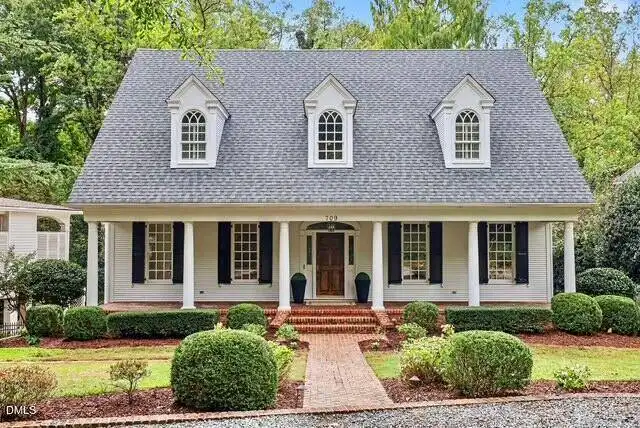
Chapel Hill is known for its tree-lined streets, established neighborhoods, and homes that reflect generations of local history. For buyers drawn to original hardwood floors, distinctive architecture, mature landscaping, and homes with a story to tell, the area’s older properties can be especially appealing.
But purchasing a historic or older home also comes with considerations that may not apply to newer construction. Understanding what makes these properties unique can help buyers decide whether the charm fits their lifestyle.
A Look at Chapel Hill’s Historic Character
Chapel Hill has three locally designated historic districts: Franklin-Rosemary, Cameron-McCauley, and Gimghoul. Together, they include more than 500 properties across the UNC campus.
The architecture throughout these neighborhoods reflects more than two centuries of development. Buyers may encounter Federal and Victorian-era homes alongside Queen Anne, Colonial Revival, Craftsman, Tudor Revival, and even mid-century modern designs.
That variety is part of what makes older Chapel Hill neighborhoods so distinctive. Rather than rows of similar homes, individual properties often feature unique floor plans, materials, craftsmanship, and architectural details that are difficult to reproduce today.
Know What “Historic” Means for the Property
An older home is not automatically a designated historic property.
Before purchasing, buyers should determine whether the home is located within a local historic district and whether any additional rules apply to future renovations or exterior changes.
In Chapel Hill’s local historic districts, many exterior alterations require a Certificate of Appropriateness. This process helps preserve the neighborhood’s architectural character and may affect projects involving windows, additions, exterior materials, porches, or other visible changes.
Buyers with renovation plans should research these requirements before closing.
Look Beyond the Character During Your Inspection
Original details can be beautiful, but the systems behind the walls deserve just as much attention.
A thorough home inspection is particularly important with an older property. Buyers may want to carefully evaluate electrical systems, plumbing, roofing, foundations, insulation, drainage, windows, heating and cooling equipment, and signs of previous repairs.
Older does not necessarily mean problematic. Many Chapel Hill homes have been thoughtfully updated over the years. The goal is to understand what has been renovated, what remains original, and what expenses may come up in the future.
Consider the Cost of Future Improvements
Restoring an older home may require different materials, specialized contractors, or custom work to preserve its character.
Before making an offer, consider not only the purchase price but also your plans for the next several years. If you want to remodel a kitchen, add living space, replace windows, or change the exterior, understanding potential costs and restrictions ahead of time can prevent surprises later.
It is also worth reviewing available permits and documentation for major improvements completed by previous owners.
Appreciate What Cannot Easily Be Recreated
Historic and established neighborhoods continue to attract buyers for a reason.
Mature trees, walkable streets, proximity to downtown and UNC, original craftsmanship, and architectural individuality can give these homes a sense of place that newer construction may not offer.
For the right buyer, a historic Chapel Hill home is not simply an older house. It is an opportunity to own a piece of the community’s character while becoming part of its next chapter.
If you’re considering an older or historic home in Chapel Hill, give Chapel Hill Realty Group a call at (919) 740-0884. With our local knowledge, we can help you explore neighborhoods, understand individual properties, and find a home that fits both your lifestyle and your long-term plans.
Social Cookies
Social Cookies are used to enable you to share pages and content you find interesting throughout the website through third-party social networking or other websites (including, potentially for advertising purposes related to social networking).